Monday, September 9, 2013

Theocritean Parallels in Eclogue III

Theocritean Parallels; Eclogue III

Idyll 1
     Date: Early 3rd c. BCE
     Genre: Bucolic (pastoral poetry)
     Setting and Characters: A shepherd, Thysis, and a goatherd meet in a Sicilain pasture one afternoon. The goatherd persuades Thysis to sing a ballad (the Affliction of Daphnis) for a goblet. Thysis ends his speech by giving his pipe to Pan and receives the cup from the goatherd. *
     Cf. l. 29-30 (Eclogue III)
 In Idyll I.25-26, a goat who has two kids and can yet fill two pails of milk is wagered
     Cf. l. 38-39
 In Idyll 1.29-31, clusters of yellow fruit on winding ivy on the goblet
     Cf. l. 43
 In Idyll 1. 59-60, Aipolos says the goblet has not yet touched his lips, but lies unsullied

Idyll 3
     Date: Early 3rd c. BCE
     Genre: Bucolic (pastoral poetry)  
     Setting and Characters: This poem is a monologue of a goatherd. He dedicates his song to Tityrus, and sings to his love Amaryllis. His gifts (apples, a garland, and a goat) and love-song are all rejected, and the poem ends in a lament
     Cf. l. 20
 In Idyll 3. 1-5, a goatherd entrusts his goats to Tityrus
     Cf. l. 68-71
In Idyll 3.10-11, the goatherd offers a present of ten apples


Idyll 4
     Date: Early 3rd c. BCE
     Genre: Bucolic (pastoral poetry)  
     Setting and Characters: Near Crotona in Southern Italy, goatherds Battus and Corydon converse while Corydon watches Aegon’s oxen. Enjoying his elevated position, Corydon teases Battus for losing the favor of Amaryllis to Milon.
     Cf. l. 1-2
                        In Idyll 4.1-2, Battus asks whose cows are present; if they are Philondas’s. Corydon responds that they are Aegon’s, and they are to graze under his watch
     Cf. l. 3
 In Idyll 4.13 the sheep are pitied for their poor herdsman
     Cf. l. 5
 In Idyll 4.3, Battus suggests that Corydon milks his sheep secretly in the evening


Idyll 5
     Date: Early 3rd c. BCE
     Genre: Bucolic (pastoral poetry)  
     Setting and Characters: This takes place in the wooded pastures by the mouth of the river Crathis (Sybaris/Thurii districts in Southern Italy). There is a lagoon nearby with figures of the Nymphs and Pan. A goatherd Comatas and a shepherd Lacon begin a contest of song. The judge of the contest is a woodcutter, Morson, who interrupts the contest and awards a lamb to Comatas.  The themes of the verses often have to do with love.
     Cf. l. 10
 In Idyll 5.112 Comatas mentions Micon’s vineyard
     Cf. l. 13-15
 In Idyll 5.11-13, Comatas accuses Lacon of being envious of the dappled skin Crocylus gifted after sacrificing a goat to the Nymphs.
     Cf. l. 25-27
 Comatas teases Lacon for being accustomed to rustic, cheap pipes and playing with Corydon
     Cf. l 62
 A translation of Idyll 5.82, Phoebus loves me (kai gar em’ Wpollwn fileei)

     Cf. l 64-67
 In Idyll 5.88, Lacon recalls Clearista throwing apples (the fruit of love) at a goatherd
     Cf. l 68-71
 In Idyll 5.94-95, Lacon praises wild apples and Comatas says he will catch a dove in a juniper tree for his girlfriend (compare Damoetas trying to give his girl eggs from a nest high in a tree)
     Cf. l 89
 In Idyll 5.126, Lacon wishes Sybaris would flow with honey for him
     Cf. l. 94-97
 In Idyll 5.100-104, Comatas interrupts the singing contest to shoo his goats away from the olives


Idyll 8
     Date: Early 3rd c. BCE
     Genre: Bucolic (pastoral poetry)  
     Setting and Characters: Daphnis and Menalcas the shepherd have a song contest judged by a goatherd. The prize is a set of pipes, and the themes include landscape and love. Edmonds does not believe this is actually a work of Theocritus.
     Cf. l. 32-34
 In Idyll 8.15-16, Menalkas won’t wager a lamb because his stern father and mother count the sheep each evening
     Cf. l. 101
 In Idyll 8.43, Menalkas says if Nais departs, the cow and cowherd will wither


* Edmonds, J. M. The Greek Bucolic Poets. London, William Heinemann. 1928.

descripsit radio totum qui gentibus orbem

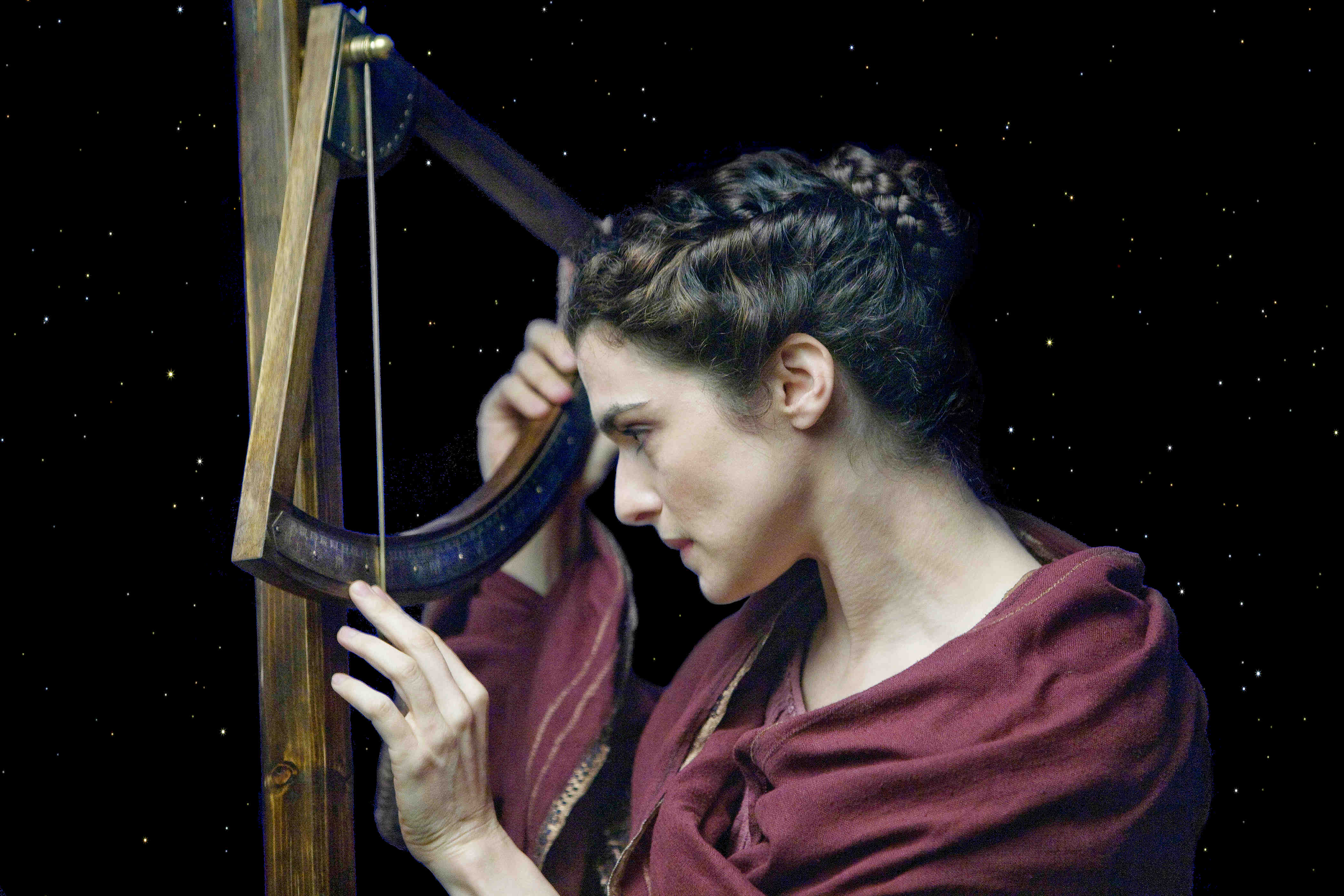
This scene from the film Agora will not answer the question of who the other ancient astronomer engraved on a cup in Eclogue 3 might be, but it does illustrate beautifully how astronomers (and geographers and mathematicians) used rods to work out complex problems. Agora features Rachel Weisz as the late antique philosopher Hypatia, who was stoned to death by a mob of angry Christians  during a riot in Alexandria.

Sunday, September 8, 2013

Music and Song in Eclogue 3

Music and song obviously play an important role in this eclogue.  I thought I'd take it apart by first addressing the most basic: the explicit references to music/song in the poem (i.e. words that explicitly signify music/song).  The following words are the ones I noticed (I don't think I missed any):

cantando (3.21), mea...fistula (3.22), and carminibus (3.22) are the first explicit words that I found.  They are Damoetas's and are in defense against Menalcas's accusation that Damoetas stole Damon's goat.  Damoetas explains that he won it fair and square in a contest against Damon.  Here, cantando and carminibus must refer to the musical noise of the pipe itself, and not singing vocally.

Menalcas repeats Damoetas's words with cantando (3.25), fistula (3.25), and carmen (3.27) in his retort, mocking him for his supposed inability to carry a tune.  He adds the phrase stridenti...stipula (3.27) as a seemingly added insult.  stridens suggests a grating, whizzing, buzzing sound, obviously not delightful to the ears, and stipula is either a piece of straw, a blade, or a stalk of some kind.  I couldn't help but recall doing something similar in my childhood with a blade of grass between my two thumbs.  It is not really a pleasant sound, beyond the initial thrill of making such a jarring noise from seemingly nothing.

The next, perhaps less explicit reference to music is Orpheaque and the following silvasque sequentis (3.46).  Orpheus, of course, is a renowned musician and poet, who not only charmed the whole underworld to retrieve his beloved, Eurydice, but also charmed all manner of plants and animals (even inanimate objects), hence the silvasque sequentis.

The next that I see is audiat (3.50) and voce (3.51).  These are more generic, however, and more or less nondescript.  voce does, however, confirm that this will be a singing contest, not a piping contest as was potentially the case based on their previous conversation.

The last explicit words, before the actual contest, would seem to be alternis and alterna, "in turns."  Williams addresses it as the amoebaean style, which is to say that one person starts, and the other person follows with the same verse, and a similar topic.  This is obviously significant for the structure of the rest of the poem.

Next, I wanted to look at the poetic structure through the lens of music/song, focusing on the sing-off between Damoetas and Menalcas.  

Round 1 (60-63):  Damoetas claims Jupiter is fond of his carmina, and Menalcas claims Phoebus Apollo, god of music and poetry (among other things), as his patron.

Round 2 (64-67): Damoetas sings about Galatea, a girl who likes him, but is apparently shy, while Menalcas caps him in a sense, by describing Amyntas, a boy who is all too willing to show his affection (mihi sese offert ultro).

Round 3 (68-71): Damoetas plans on giving wood pidgeons he has found; Menalcas has already given 10 apples, and will send another 10 tomorrow.

Round 4 (72-75): Damoetas returns to Galatea, and her divine-worthy words to him; Menalcas does not one-up Damoetas this time, but does return to Amyntas, who is not useful (for Menalcas's purposes, at least) if he is chasing after boars.

Round 5 (76-79): Damoetas asks Iollas to send another girl, Phyllis, as it is his birthday.  Regarding Menalcas's retort, the first option in Williams's notes did not make sense to me, so I went with the idea that Menalcas is taking up the person of Iollas.  In this case, and perhaps this is a stretch, Menalcas is implying that, ironically, Damoetas is sending Iollas to fetch her, when it is Iollas who has Phyllis's affection (i.e. Jollas is having fun with his friend's girl on the side).  Perhaps we can discuss this in class.

Round 6 (80-83): Damoetas, through a series of pastoral analogies, implies Amaryllis's anger is not something for which he wishes.  Menalcas lines up his own analogies in direct symmetry with Damoetas (almost mockingly so), but flips it on its head. While Damoetas uses triste, and mentions yet a third girl, Amaryllis, Menalcas employs dulce and remains with his Amyntas.

Round 7 (84-7): Damoetas points out that Pollio, a poet more well-known for his political background, likes Damoetas's poetry and suggests sacrificing a young (female) cow.  Menalcas addresses Pollio's ability as a poet himself (facit nova carmina), and suggests sacrificing a bull.

Round 8 (88-91): Damoetas offers a prayer for Pollio, Menalcas offers a rather amusing curse for Bavius, Maevius, and anyone who likes them as poets.

Round 9 (92-95): Abrupt change in topic on Damoetas's part- to flowers and strawberries and cold snakes in the grass.  Menalcas warns his sheep not to get too close to the river bank.

Round 10 (96-99): As Williams mentions, Damoetas, for the first time, seems to respond to Menalcas's previous idea of round 9, warning Tityrus to keep the goats back from the river.  Menalcas continues the theme, suggesting that the sheep be milked before the heat dries them all out.

Round 11 (100-103): Damoetas sings of his bull, and how both of them must be emaciated from the love-bug.  Menalcas caps Damoetas again, brushing amorem aside, and suggesting that the evil eye is to blame for his gaunt lambs.

Round 12 (104-107): Both give a riddle- Damoetas potentially refers to one's perception of the sky (one article suggested that the three elbows were a triangle, which is 180 degrees, and therefore the image of the sky on the horizon), and Menalcas seems to refer to the ai ai of the ancient-day hyacinth.

Needless to say, the contest is inconclusive.  However, the structure of the sing-off comes out nicely in this format.   For the most part, Damoetas, as the person who went first, seems to have been able to change to any topic he wished, and Menalcas, as the follower, would more or less always respond in some way to Damoetas's couplet.  The only time Menalcas does not seem to try to match or cap Damoetas is Round 9, when the topic of singing has changed abruptly (even in Round 4, Menalcas at least continues the topic of lovers).  The only time Damoetas seems to take inspiration from Menalcas is the entrance to Round 10.

It is difficult to address the melody of either singer or any possibility of instrumental accompaniment, as there are no references to such in the competition itself.  They are both singing in the same meter, however, so they would have the same rhythm to their music.  Perhaps we can do a rendition in class.


Divinities in Eclogue 2

Amphion Dircaeus (24)
Pan (31-33)
Nymphs and possibly a naiad (46)
Gods live in the woods, and Dardanian Paris (60-61)
Pallas (61-62)


The divinities which Vergil mentions in Eclogue 2 span the divide between the countryside and the opposing urban centers. Amphion Dircaeus is the first such figure mentioned (24). While Amphion is not a god himself, he is a son of Zeus. He is a famous herdsmen – and it is to this that the poet directly alludes in the poem – but he is also known as the ruler of Thebes who built the city’s walls, embodying both the rural and the urban in his character. The connection to rustic song is also the focus of the mention of Pan, the god of woodlands and pastures and herds and essentially all rustic and rural things (31-33). However, although the beginning of the description of Pan specifically mentions the notion of shepherds imitating their god by imitating his song, Vergil further tells of how Pan instituted the tradition of his pipes. The later mention of nymphs and possibly of a naiad elaborate the richness of the countryside by bearing baskets full of all manner of their flowers (46). Nais may be in reference to naiad, especially in its proximity to nymphae  earlier in the line, but the context does not seem right for mention of a fresh-water nymph, so it is possible this is imply the name of a country maiden. Finally, near the end of the poem, the narrator openly appeals to the notion that there are certain gods who dwell in the woods, and others such as Paris as well (60-61). He further emphasizes a separation between the country and the city, in opposition to the previous statement regarding woodland-dwelling gods, by wishing Pallas to remain in her citadels and cities which she has built (61-62).

Thursday, September 5, 2013

Flora in Eclogue 2


Spineta (line 9)
     English name: Blackthorn, Thorn-hedge
     Uses: Weed; hiding/burrowing place for animals
     Image:

Serpyllum (line 11)
     English name: Thyme
     Uses: A delicious seasoning
     Image:

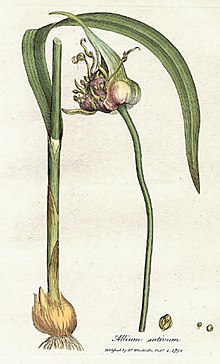
Alia (line 11)
     English name: Garlic
     Uses: Staple
     Image:

Ligustrum (line 18)
     English name: Privet
     Uses: Privacy hedging
     Image:

Vaccinia (line 18, 50)
     English name: Whortleberry, European blueberry, Bilberry
     Uses: Produces an edible dark fruit somewhat like the American blueberry
     Image:

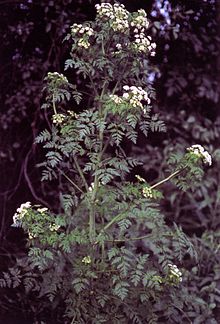
Cicutis (line 36)
     English name: Hemlock
     Uses: Famed poison
     Image:

Lilia (line 45)
     English name: Lily
     Uses: A pleasing garden flower.
     Image:

Violas (line 47)
     English name: Violet
     Uses: Another garden flower
     Image:

Papavera (line 47)
     English name: Poppy
     Uses: A wildflower which naturally contains morphine
     Image:

Narcissum (line 48)
     English name: Narcissus flower
     Uses: A late-blooming garden flower
     Image:

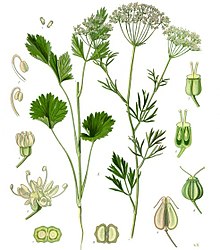
Anethi (line 48)
     English name: Dill or Anise
     Uses: Produces strong seasonings
     Image:

Casia (line 49)
     English name: Cinnamon
     Uses: Produces a pungent bark
     Image:

Calta (line 50)
     English name: Marigold
     Uses: A garden flower with edible florets, sometimes used for fabric dyes, medicines, and cosmetics
     Image:

Lauri (line 54)
     English name: Laurel tree, Sweet bay
     Uses: Sacred to Apollo
     Image:

Myrte (line 54)
     English name: Myrtle
     Uses: Sacred to Venus (some medicinal uses)
     Image:


Tuesday, September 3, 2013

The Shrill Song of the Cicada, and Other Sounds

Given the emphasis in the Eclogues on song, I thought it might be useful to have some links to animal sounds to go with Amy's very detailed post on fauna.

The  wood pigeon
The lovely turtledove
The bee
A single goat
A herd of goats
Lamb and Sheep
A cow
A stag
The cicada 
And speaking of cicadas (the translation uses "locusts," but Plato says cicadas), they have a special place in the landscape of song, according to Plato (Phaedres 258-60).  At the beginning of the Phaedrus, Socrates and Phaedrus leave the city and find a locus amoenus:

Socrates: But let me ask you, friend: have we not reached the plane-tree to which you were conducting us?

Phaedr. Yes, this is the tree.

Soc. By Hera, a fair resting-place, full of summer sounds and scents. Here is this lofty and spreading plane-tree, and the agnus cast us high and clustering, in the fullest blossom and the greatest fragrance; and the stream which flows beneath the plane-tree is deliciously cold to the feet. Judging from the ornaments and images, this must be a spot sacred to Achelous and the Nymphs. How delightful is the breeze:-so very sweet; and there is a sound in the air shrill and summerlike which makes answer to the chorus of the cicadae. But the greatest charm of all is the grass, like a pillow gently sloping to the head. My dear Phaedrus, you have been an admirable guide.

Phaedr. What an incomprehensible being you are, Socrates: when you are in the country, as you say, you really are like some stranger who is led about by a guide. Do you ever cross the border? I rather think that you never venture even outside the gates.

Soc. Very true, my good friend; and I hope that you will excuse me when you hear the reason, which is, that I am a lover of knowledge, and the men who dwell in the city are my teachers, and not the trees or the country. Though I do indeed believe that you have found a spell with which to draw me out of the city into the country, like a hungry cow before whom a bough or a bunch of fruit is waved. For only hold up before me in like manner a book, and you may lead me all round Attica, and over the wide world. And now having arrived, I intend to lie down, and do you choose any posture in which you can read best. Begin....

Later in the Dialogue, Socrates tells a myth about cicadas, associating them with the Muses:

Socrates
We have plenty of time, apparently; and besides, the locusts seem to be looking down upon us as they sing and talk with each other in the heat.  [259a] Now if they should see us not conversing at mid-day, but, like most people, dozing, lulled to sleep by their song because of our mental indolence, they would quite justly laugh at us, thinking that some slaves had come to their resort and were slumbering about the fountain at noon like sheep. But if they see us conversing and sailing past them unmoved by the charm of their Siren voices, [259b] perhaps they will be pleased and give us the gift which the gods bestowed on them to give to men.
Phaedrus
What is this gift? I don't seem to have heard of it.
Socrates
It is quite improper for a lover of the Muses never to have heard of such things. The story goes that these locusts were once men, before the birth of the Muses, and when the Muses were born and song appeared, some of the men were so overcome with delight [259c] that they sang and sang, forgetting food and drink, until at last unconsciously they died. From them the locust tribe afterwards arose, and they have this gift from the Muses, that from the time of their birth they need no sustenance, but sing continually, without food or drink, until they die, when they go to the Muses and report who honors each of them on earth. They tell Terpsichore of those who have honored her in dances, and make them dearer to her; [259d] they gain the favor of Erato for the poets of love, and that of the other Muses for their votaries, according to their various ways of honoring them; and to Calliope, the eldest of the Muses, and to Urania who is next to her, they make report of those who pass their lives in philosophy and who worship these Muses who are most concerned with heaven and with thought divine and human and whose music is the sweetest. So for many reasons we ought to talk and not sleep in the noontime.

Monday, September 2, 2013

Divinities in Eclogue 1

The following are mentions of divinities in Eclogue 1:
Lines 5-10: Tityrus explains that a god is responsible for his leisure
Line 18: Meliboeus inquires about Tityrus’ yet unnamed deity
Line 36: Meliboeus describes Amaryllis has having called out to the gods in sadness
Line 41: Tityrus explains that he needed to search elsewhere for gods and aid
Lines 42-45: Tityrus indirectly identifies his god as Octavian
Lines 59-64: Tityrus explains that it will be a long time before he forgets his god’s face


Eclogue I begins the series of poems by blending religious devotion with political devotion, particularly through the eyes of the character Tityrus. This shepherd found his occupations to be unprofitable and his own self, as he says, in need of libertas (28-36). He goes to Rome to seek potentially divine aid and finds it from Octavian. Tityrus describes Octavian as having smoking altars in Rome (44), and when Octavian orders Tityrus to be a cowherd, Tityrus himself begins to hold Octavian as a god, sacrificing lambs to him on an altar (6-8). Thus both by identification and by practice though not by name, Vergil describes Octavian as a god and through this use of religion he introduces Roman politics into the tradition idyllic setting in the poem.